1. Whey is an excellent source of high quality protein
As a dietary supplement, whey protein is widely popular among bodybuilders, athletes, and others who want additional protein in their diet.
There are three main types of whey protein powder, which are classified by their final protein concentration:
- Concentrate (WPC): equal to or less than 89%
- Isolate (WPI): equal to or greater than 90%
- Hydrolysate (WPH): variable
WPC is the most common type and is usually the most affordable. WPI typically has the highest amount of protein and the fewest calories, as it’s mostly protein. But it’s usually more expensive.
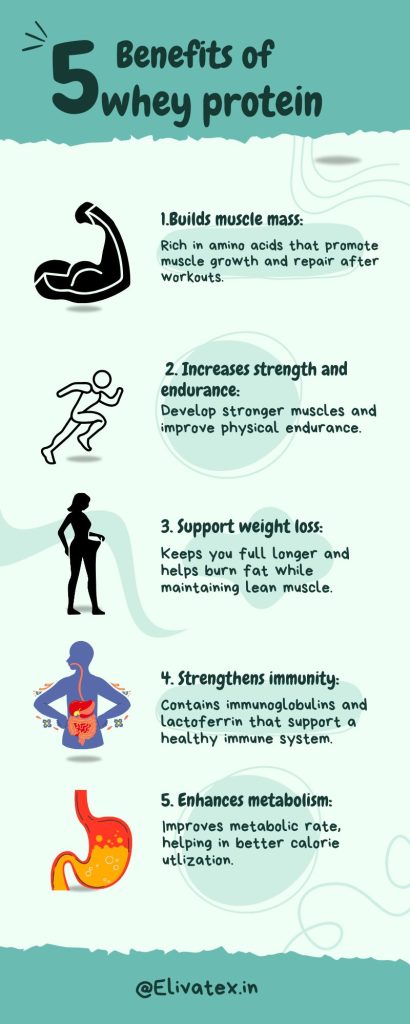
2. May promote muscle growth
Protein is one of the most important nutrients for maintaining or preventing muscle loss, especially as you get older. It can support the growth and recovery of cells necessary for muscle energy, tissue growth, and restoration.
Whey protein, in particular, is known as a complete protein because it contains all nine essential amino acids your body needs, but can only be obtained through diet. It’s also rich in a branched-chain amino acid called leucine, which is the most growth-promoting of the amino acids.
Some research suggests that whey protein supplementation may play an important role in preventing and managing age-related muscle loss, known as sarcopenia. It may help build muscle mass and improve strength.
However, it’s important to note that resistance training should be a key part of anyone’s weekly routine to help build muscle, regardless of age. Protein alone cannot support muscle growth.
As such, the most effective strategy for muscle building is a combination of strength training and consuming a balanced diet of high protein foods, carbohydrates, and some healthy fats.

3. May lower blood pressure
High blood pressure (hypertension) is one of the leading risk factorsTrusted Source for heart disease.
A 2023 review of 18 studies found that whey protein supplementation may help reduce systolic blood pressure. This refers to the pressure between the arteries when your heart beats. It’s the top number in a blood pressure reading.
The researchers also noted that whey protein may affect diastolic blood pressure when consuming more than 30 grams (g) of WPI per day, for 10 weeks, in people with a body mass index (BMI) of 25 to 30.
This effect may be due to a family of bioactive peptides in dairy called angiotensin-converting enzyme inhibitors (ACE inhibitors). In particular, lactokinins.
However, more research is needed to understand whey protein’s possible effects on blood pressure.
A 2019 study in people with overweight and mild to moderate hypertension found that taking 30 g of whey protein daily for 12 weeks helped reduce systolic blood pressure, but not diastolic.
The authors concluded that the effects on blood pressure may have been due to weight loss, among other factors.

4. May help manage type 2 diabetes
Type 2 diabetes is a chronic disease characterized by high blood sugar and impaired insulin function. Insulin is a hormone that stimulates the uptake of blood sugar into cells, keeping it within healthy limits.
Research suggests that whey protein supplementation may help manage diabetes in several ways, including:
- lowering blood sugar levels after eating
- increasing insulin levels and sensitivity to its effects
- managing blood glucose levels
- increasing levels of fullness
- lowering lipids, such as triglycerides
As a result, whey protein may be effectively used as a supplementary treatment for type 2 diabetes.
However, make sure to choose whey protein products that have minimal amounts of added sugars and carbs, as these can impact your blood glucose levels.
5. May help reduce inflammation
Inflammation is part of the body’s response to damage. Short-term inflammation can be beneficial, but under certain circumstances, it may become chronic.
Chronic inflammation is a risk factorTrusted Source for many health conditions, including heart disease, diabetes, and arthritis, and it may reflect underlying health conditions or lifestyle habits that could harm health.
A 2022 review found that whey protein supplementation helped reduce C-reactive protein (CRP) and interleukin-6 (IL-6), two key markers of inflammation in the body.